Ghani Font for Natural Branding and Creative Projects
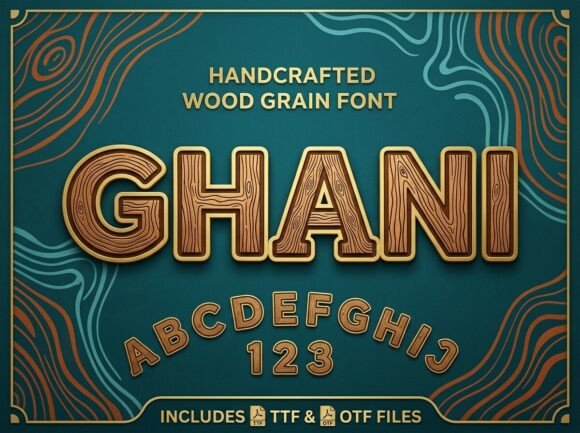
It was a quiet afternoon when I opened my design board, staring at a blank canvas. The client had just sent over their brief: a new branding project for a small, eco-conscious café that wanted to feel like stepping into a forest. I needed a font that could capture the essence of nature—something raw, organic, and handcrafted. That’s when I discovered Ghani, a display font that perfectly mimics the intricate texture of natural timber with its stunning wood-grain inlay.
Ghani for Café Branding and Cozy Visual Identity
Ghani immediately stood out as the perfect fit for this project. As a display font, it brought a sense of warmth and authenticity to the brand identity. I started by testing it on a logo draft, placing it against a muted green background. The wood-grain texture of Ghani added depth and character, making the café’s name feel like it belonged on a rustic wooden sign rather than a digital screen.
I used Ghani for the main headline on the logo and paired it with a clean sans-serif font for the supporting text. This combination created a balance between the organic feel of the café and the modern readability needed for menus and signage. The result was a visual identity that felt both inviting and professional.
Ghani on Packaging Mockups and Product Labels
Next, I moved on to packaging mockups. For the café’s coffee bags and branded cups, I tested Ghani again. It worked beautifully on product labels, especially when printed with a subtle matte finish that enhanced the wood grain. The font’s texture gave the packaging a tactile quality even before it hit the shelves.
One thing I noticed was how well Ghani performed on smaller formats. On a label sticker or a cup sleeve, it didn’t lose its charm—it still felt intentional and crafted. This made it an excellent choice for any brand looking to convey a natural, handmade aesthetic without sacrificing clarity.
Ghani for Website Headers and Digital Branding
When designing the café’s website, I placed Ghani in the hero section. The font’s bold presence anchored the page, drawing attention to the café’s tagline while maintaining a cohesive look with the rest of the site. I made sure to use it sparingly, reserving it for headlines and key calls to action to avoid overwhelming the reader.
The wood-grain detail in Ghani added a unique visual element that helped differentiate the café from competitors. It wasn’t just about aesthetics; it also reinforced the brand’s commitment to sustainability and natural materials. Readers instantly felt the connection to the café’s values through the typography alone.
Ghani in Social Media Graphics and Print Materials
For social media posts, I experimented with Ghani in different sizes and weights. It looked great in Instagram stories and pinned posts, especially when paired with high-quality images of the café’s interior or products. The font’s texture complemented the photos, creating a unified visual language across all platforms.
On print materials like flyers and posters, Ghani maintained its appeal. I found that using it in larger formats allowed the wood-grain detail to shine, making each piece feel more like a work of art than just marketing collateral. It was clear that this font had the versatility to adapt to various mediums without losing its character.
Ghani for Editorial Design and Creative Projects
In editorial design, Ghani proved to be a strong asset. When working on a brochure for the café, I used it for section headers and titles. Its natural texture added a layer of storytelling, making the content feel more personal and immersive. I paired it with a serif font for body text, which helped maintain readability while keeping the overall design cohesive.
What I appreciated most was how Ghani didn’t demand too much attention but still left a lasting impression. It was subtle enough to blend into the layout yet distinctive enough to stand out when needed. This made it ideal for creative projects where the font needed to be both functional and expressive.
Ghani in Merchandise and Brand Extensions
Finally, I explored using Ghani in merchandise like mugs, t-shirts, and tote bags. The font’s texture translated well into screen printing and embroidery, giving the products a handcrafted feel that aligned with the café’s brand image. I found that Ghani worked best in short-form text, such as logos or slogans, where its details could be fully appreciated.
As I wrapped up the project, I realized that Ghani had become a core part of the café’s visual identity. It wasn’t just a font—it was a bridge between the brand’s values and the audience’s perception. And that, I think, is what makes Ghani so special.