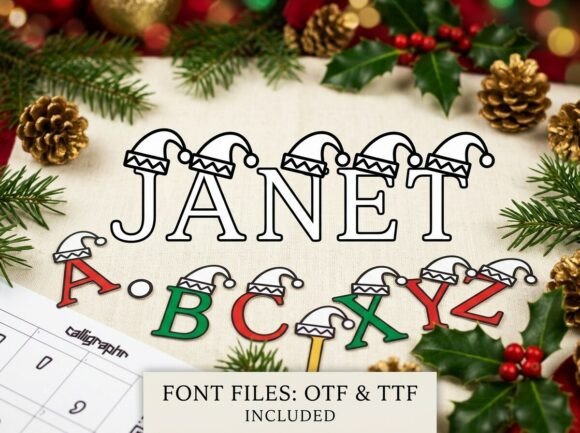
Janet: A Display Font for Bold Editorial Statements
There’s a moment in every editorial project when the right font feels like the missing piece of a puzzle. Recently, while redesigning the header for a lifestyle blog focused on mindful living, I found myself drawn to Janet, a display font with a distinct personality that immediately commanded attention. As a Fonts enthusiast and someone who values both readability and visual storytelling, I was intrigued by how this font could elevate the tone of the publication.
Janet for Lifestyle Blog Headers and Branding Elements
Janet is not your average Display typeface. It carries an artistic flair with its unique elements and strong visual character, making it ideal for headers that need to stand out without overwhelming the reader. When applied to a blog header about wellness and self-care, Janet brought a sense of elegance and calm that aligned perfectly with the brand's identity. The rhythm of the letters felt natural, as if they were crafted with intention rather than just for aesthetics.
Its use in branding elements such as logos or social media banners also proved effective. The font’s visual personality added a touch of sophistication that resonated well with the target audience—those seeking curated content that feels personal and meaningful.
Janet in Recipe Ebooks and Digital Magazines
In a recent project involving a recipe ebook for seasonal dishes, I tested Janet for chapter titles and section headers. The font’s decorative nature made it perfect for introducing new themes, such as “Autumn Comforts” or “Winter Warming Dishes.” While I paired it with a clean sans serif font for body copy, Janet maintained a consistent visual hierarchy without distracting from the content.
For digital magazines, where visual appeal is crucial, Janet performed exceptionally well in pull quotes and feature headlines. Its strong presence helped draw the reader’s eye to key messages, enhancing the overall editorial experience. However, I noted that it was best reserved for shorter text elements rather than long paragraphs, which would risk losing clarity.
Janet for Wedding Guides and Editorial Feature Pages
When working on a wedding guide, I experimented with Janet for section headings like “The Perfect Venue” and “Catering with Flair.” The font’s artistic elements added a romantic and elegant touch that complemented the theme. It worked especially well in combination with subtle illustrations and soft color palettes, creating a cohesive design that felt both modern and timeless.
On editorial feature pages, where the goal is to create a memorable first impression, Janet delivered. Used sparingly for headline text, it helped establish a mood that was both engaging and professional. Its versatility allowed it to fit into various layouts, from minimalist designs to more ornate ones, proving its adaptability across different editorial contexts.
Readability and Practical Considerations for Janet
While Janet excels in display roles, it’s important to consider its suitability for screen reading and mobile layouts. In testing, I found that at smaller sizes or on low-resolution screens, some of the more intricate details of the font became less legible. For this reason, I recommend using Janet primarily for larger text elements such as titles, headers, and pull quotes, rather than for dense blocks of text.
When considering Fonts for print or PDF exports, I noticed that Janet rendered beautifully in high-resolution formats, maintaining its visual integrity across different platforms. This makes it a great choice for printable guides, course materials, or downloadable content where quality matters.
Before incorporating Janet into any commercial project, I always check for included styles, alternates, ligatures, and multilingual support. Ensuring that the font has the necessary features for the intended use is essential, especially when designing for global audiences or preparing content for client publications.